Lace Theory: The Sneaker Modders Who Cracked the Trend Code Before the Brands Did
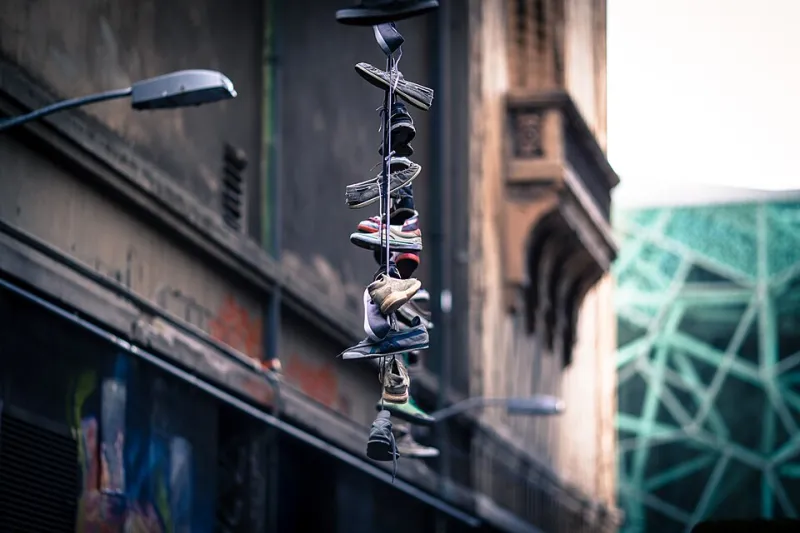
Photo: Arnaud Mesureur tbzr, CC0, via Wikimedia Commons
Somewhere in a private Discord server you're probably not in, someone just logged a lace swap. Not because they're bored. Because they're working.
It sounds absurd until you sit with it for a minute. But a loose network of sneaker obsessives — modders, resellers, and a few people who exist somewhere in between — has been quietly building out a methodology around customization behavior that functions less like a hobby and more like a forward-looking intelligence operation. The thesis is simple, even if the execution isn't: when people start modifying a shoe in specific ways, that modification pattern is a leading indicator of where the broader culture is heading.
They call it, informally, lace theory. And the people running it are several months ahead of you.
The Signal Hiding in Plain Sight
Here's the core idea. When a sneaker drops and immediately gets swapped out — laces pulled, replaced with a flat wax in an off-colorway, or maybe a rope lace in a color that doesn't match anything in the original palette — that's not random. It's a community collectively saying something about what the shoe should have been. Or what they want it to become.
The modders in these circles have started treating those swaps as data points. Which colorways get touched first? What gets replaced and what gets left alone? Is the modification moving toward earth tones or is neon creeping back in? Are people adding contrast or pulling it out?
"The lace is the cheapest, lowest-commitment modification you can make," one member of a private server explained in a thread that got screenshotted and quietly passed around earlier this year. "Which means it's the most honest signal. People will swap a lace on a shoe they're not even sure about yet. That's exactly when you want to be watching."
The logic tracks. A full custom is a statement. A lace swap is a feeling.
How the Spreadsheets Actually Work
The more organized cells in this network — and yes, some of them are running actual structured data collection — have built out tracking systems that would look familiar to anyone who's spent time in the analytics-adjacent corners of this site's readership.
The basic version: a shared doc where members log modifications they spot in the wild. Instagram posts, Grailed listings with custom lacing, TikTok fits, Discord flex channels. Each entry captures the shoe model, the original colorway, what got swapped, the approximate date, and — critically — the geographic origin if it's identifiable. East Coast versus West Coast modification aesthetics diverge enough that location matters.
The more advanced setups layer in timing relative to the original drop date, the account size of whoever posted it, and whether the modification is appearing in isolation or clustering. Clustering is the real tell. When three or four unconnected people in different cities all independently swap the same shoe toward the same colorway within a two-week window, that's not coincidence. That's the edge of a wave.
"We called the return of gum soles six months before any brand announcement," another member noted. "Not because we're psychic. Because we watched which shoes people were modding toward gum, and it was consistent across markets."
What the Brands Are Missing
Major labels have trend forecasting operations, obviously. Some of them are sophisticated. But the structural problem is that institutional trend research tends to look at what's already visible — what's selling, what's being searched, what influencers are wearing. By the time something registers on those dashboards, the community that originated it has already moved.
The lace theory network operates at an earlier layer. Modifications happen before purchases fully validate. They happen when someone loves a silhouette but not the execution — which means the silhouette has legs, and the execution is the variable. That's genuinely useful information that isn't showing up in any brand's sell-through data.
There's also a geographic granularity problem with corporate forecasting. The modification patterns coming out of certain Chicago resale circles look different from what's happening in the sneaker communities around Atlanta or the independent shop ecosystems in the Pacific Northwest. The private Discord networks tracking this stuff have members embedded in all of those markets simultaneously, sharing observations in something closer to real time than any brand research cycle allows.
The Resale Angle
This is where it gets commercially interesting, and also where the community gets a little cagey about what they share publicly.
If you can identify a shoe that's getting heavy modification attention early — before the broader market catches on that the silhouette is about to have a moment — you can position inventory ahead of the curve. Buy at current prices, hold, and let the demand catch up to what the modification patterns already told you was coming.
Some members are explicit that this is the point. Others frame it more as a pure interest in the cultural mechanics, the forecasting as its own reward. Probably both things are true for different people in the network, and the lines blur.
What's consistent is the insistence that the methodology actually works. Not perfectly, not always, but consistently enough that people keep building it out and keep treating the data as worth collecting.
The Aesthetic as Language
There's something worth sitting with here beyond the trend-forecasting mechanics. What the lace theory community has essentially figured out is that modification behavior is a form of communication — a way that communities express preferences and desires that the market hasn't caught up to yet.
Customization has always been a form of critique. You're taking someone else's design decision and revising it according to your own taste. At scale, those revisions aggregate into something legible, a collective statement about what the culture actually wants versus what it was given.
The people running spreadsheets on this aren't just trying to call the next colorway. They're reading a language that most of the industry doesn't know exists yet. Which, if you've been paying attention to how subcultures and commercial markets tend to interact, is a pretty familiar position to be in.
The brands will catch up eventually. They usually do. But by then, the network will have already moved on to whatever signal comes next.
That's kind of the whole point.